
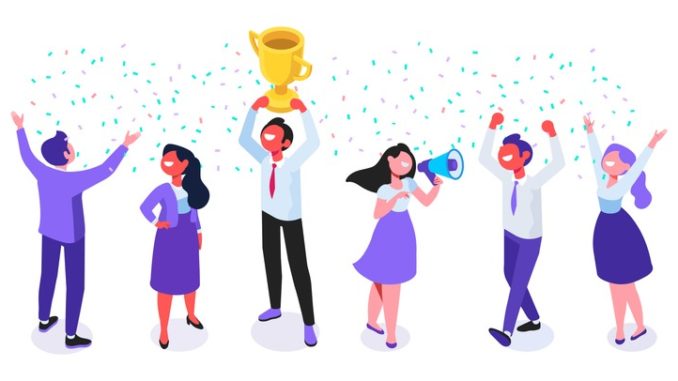
We are a society of goal-setters, a culture defined by how much we can achieve in the shortest space of time – but, by slowing down a little, and recognising even the smallest of achievements, we can learn to enjoy the process
CREDIT: This is an edited version of an article that originally appeared on Happiful
Our career, relationships – and often our entire lives – are conducted with achievement in mind – a set of objectives we must complete to feel satisfied with who we are. And who can blame us? With social media bombarding us with people’s highlight reels, is it really any wonder that we fall into the habit of fixating on the outcome instead of learning to enjoy the process?
While goal-setting has its value, too much fixation on it can rob us of the pleasure of in-the-moment experiences. Our infatuation can lead us to take shortcuts, make mistakes and displace the value of time, effort and patience. It can also lead us to compromise on our ethical values – which never bodes well for taking care of our mental health.
Being too goal-oriented can lead to a state of perpetual dissatisfaction with the present; we look at ourselves through the lens of self-criticism, feeling like we are never enough. Too much goal-setting can cause a persistent case of ‘what next syndrome’, continuously seeking the next thing to strive for, and never appreciating what we have here and now. We have so much more to offer, and so much more to gain, from letting go of the outcome and learning to enjoy the process instead.
Recognise that milestones are arbitrary
First, ask yourself, ‘Why the rush?’ We’ve grown up with the narrative that people have their dream career by their 20s, are married with kids in their 30s, and save up enough to retire by 55. Society teaches us to uphold invented milestones that create a sense of urgency where there is none.
Once you recognise that, actually, these milestones don’t have to be the predictors of your life, it takes the pressure off and allows you to find purpose in the present – not where you have to be in 10 years’ time.
Stay in the moment
This is easier said than done. Being in the moment is not something that comes naturally to most of us; it’s a skill that takes time, patience, practise, and compassion. You aren’t going to do it perfectly straight away, and you don’t have to.
To ease yourself in, try doing one mindful task a day, where you keep your attention on the thing at hand. If you stop worrying about whether you’ll be good or bad, you can learn to enjoy the places your mind goes, and not get too anxious when it strays from what you’re doing.
Filter your social media
Research has shown how social media can negatively impact our mental health, but we’re still not great at cultivating an online environment that actually makes us feel good about ourselves. We fill our feeds with people whose lives we wish we had and these serve as a reminder of what we don’t have, or what we haven’t done, keeping our minds occupied by issues outside of the present.
The best thing you can do is filter your social media feed to include only accounts that celebrate the seemingly uneventful – the mundanity of just living life each day as it comes. You’ll soon start to see that the process of day-to-day living is, actually, rather spectacular.
Know that you have value, independent of goals and achievements
Regardless of your goals and achievements, know that you have value beyond them. Your worth is not defined by how many career milestones you reach, or what checkpoints you get to tick off the fastest. You, as you are right here and right now, are worthy of love, respect, and dignity – and no goal can ever mess with that.
Don’t forget to follow us on Twitter, like us on Facebook, or connect with us on LinkedIn!

Be the first to comment