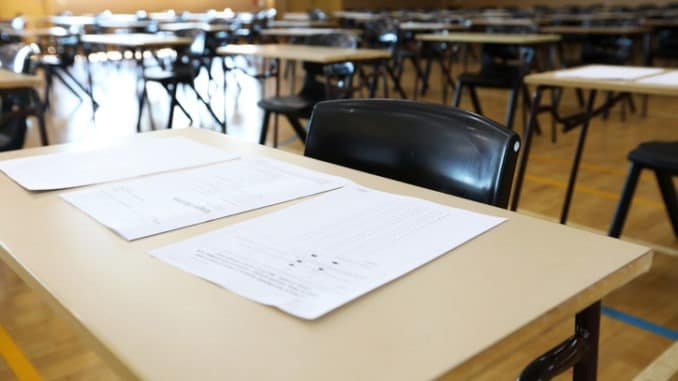
As reported by BBC news, the Welsh exams regulator is recommending GCSE exams be scrapped in favour of assessments next summer
Qualifications Wales said this was the best way of ensuring fairness to pupils, while offering certainty over what will happen in uncertain times. The Scottish government took a similar move, only keeping exams for Highers – its A-level equivalent. In England, the government is insisting all national exams will go ahead. But its exams regulator, Ofqual, is consulting on how GCSE and A-level exams can be modified so they are held fairly next summer.
The Westminster government has already said exams will go ahead, but three weeks later than usual and over a condensed period of three weeks. However, further changes and contingency plans for exams are expected to be announced within weeks.
A second review for Wales, based on interviews with many involved and affected by the disarray of 2020 exams, calls for all GCSE, AS-Levels and A-Level exams to be axed entirely. The Independent Review Panel wants grades to be awarded on the basis of moderated assessments and for the priority of the series to be the needs of, and fairness to, pupils. Wales’s education minister Kirsty Williams will now consider the issue and is set to announce a decision on 10 November.
Pupils across the UK have lost months of learning due to the school shutdown in the last academic year, and many have missed periods of schooling this term because of COVID-related reasons. Teachers’ unions and head teachers have called for the Westminster government to draw up a ‘plan B’, in case exams cannot take place.
A new report from the Education Policy Institute highlighted the varying attendance rates across the UK during the pandemic. It said rising COVID-19 infection rates had created challenges for schools since they reopened, with hundreds of thousands of pupils and staff being sent home following outbreaks of the virus.
The think tank’s analysis shows that in areas with the highest rates of the virus in the UK, such as the north-west of England, as many as four in 10 secondary pupils were unable to attend school during October. In contrast, other areas have seen almost all of their pupils attend school in person.
The research also suggests that in the first half of the autumn term, the most deprived areas in the UK were more likely to have seen lower pupil attendance. It finds a clear link in Scotland between pupils with higher levels of deprivation and low school attendance levels. There are indications this pattern is repeated in other parts of the UK, it says, with poorer pupils more likely to miss out on formal schooling during the first term back.


Be the first to comment