
A prolonged illness is often unavoidable, and always unfortunate, and the dynamic of returning to work can be a complicated process for both the employer and the employee
CREDIT: This is an edited version of an article which originally appeared on What Works Wellbeing.
The most commonly reported ill-health occurrences among workers in developed countries have consistently been musculoskeletal and common mental health conditions such as depression, stress and anxiety. These conditions are a source of discomfort for the people experiencing them, as well as requiring employers to provide sick-leave concessions. Moreover, as the graph below shows, the trend is that these conditions are persisting.
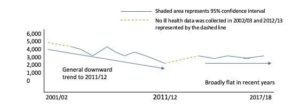
Summary statistics for Great Britain 2017
Even though there is evidence that workplace-based interventions which make provision for work accommodations, contact with healthcare providers, early contact with workers by workplace, ergonomic worksite visits and the presence of a return to work co-ordinator are effective in helping people recorded as sick within an organisation with musculoskeletal and common mental health conditions return to work, current sickness absence statistics raise questions:
- How sustainable are the effects of these interventions on return-to-work outcomes?
- Are there other factors, not currently taken into account in the implementation of these interventions, that are likely to achieve more sustainable return to work outcomes?
‘Sustainable’, in this context, refers to a situation where stable, full-time or part-time return to work is achieved, either to the original, or a modified position, for a period of at least three months. This has to be without a relapse or recurrence of the sickness absence.
Key findings
- Studies of both quantitative and qualitative design present a varied level of evidence ranging from very strong to very low – indicating that both personal and social factors play a role in facilitating a sustainable return to work.
- High levels of support from leaders and co-workers can improve the self-confidence and optimism of the returning worker, thus making them feel valued, leading to better work attitude and self-efficacy and better outcomes for returning workers.
- Younger workers, and workers with a higher education level, were more likely to return to work sustainably than older employees and people of lower education level.
- Worker-initiated changes to their work, economic status, length of absence and job contract or security show indications of an impact on sustainable return to work, but there are too few studies exist to draw definite conclusions.
- Results regarding gender were inconsistent; in some instances men showed more sustainable return to work and, in others, women did.
What does this mean for policy and practice?
Although return to work takes place within a complex system involving employing organisations and the healthcare system, given the consistent evidence on the role of line managers, we recommend that policy-makers consider ways to provide guidance for employers to help equip line managers with relevant skills, knowledge and a repertoire of appropriate actions.
Promoting a culture of support and choice in the workplace is essential; a culture that makes returning workers feel valued, worthy and not necessarily blamed for absence would improve work attitudes and ease the transition back to work.
Don’t forget to follow us on Twitter, like us on Facebook, or connect with us on LinkedIn!

Be the first to comment